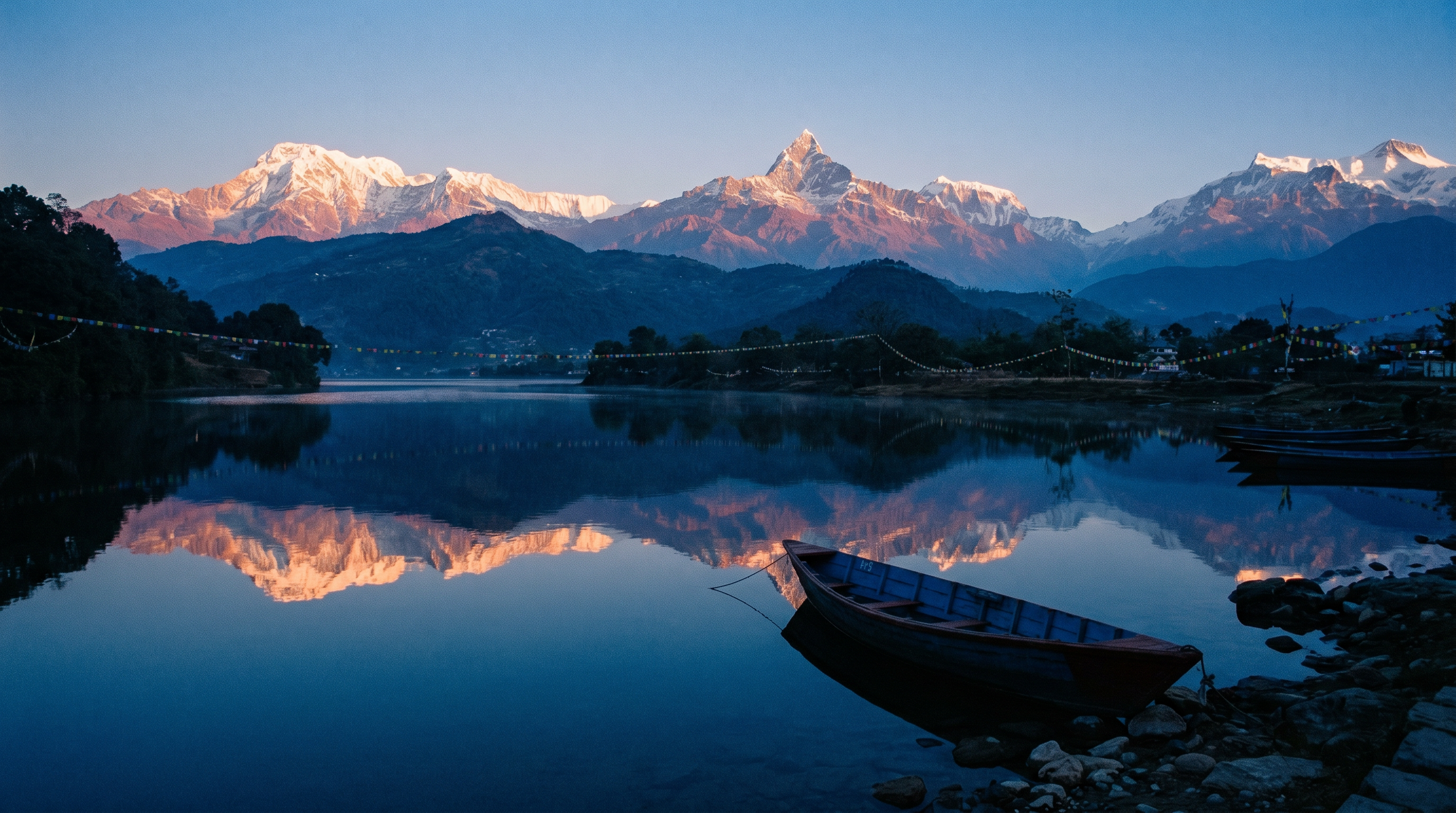
A walk into the sanctuary, through Gurung country, bamboo and rhododendron, to the amphitheatre of Annapurna.
Distance
~48 km
High point
4,130 m
Difficulty
Moderate
Group
Small
The Valley
Before the days, the place.
Most operators will hand you the itinerary and assume the rest is your problem. We think the rest is the trek. What follows is the frame the walk sits inside. Read it before the days. The days will read differently.
i.
Gurung country
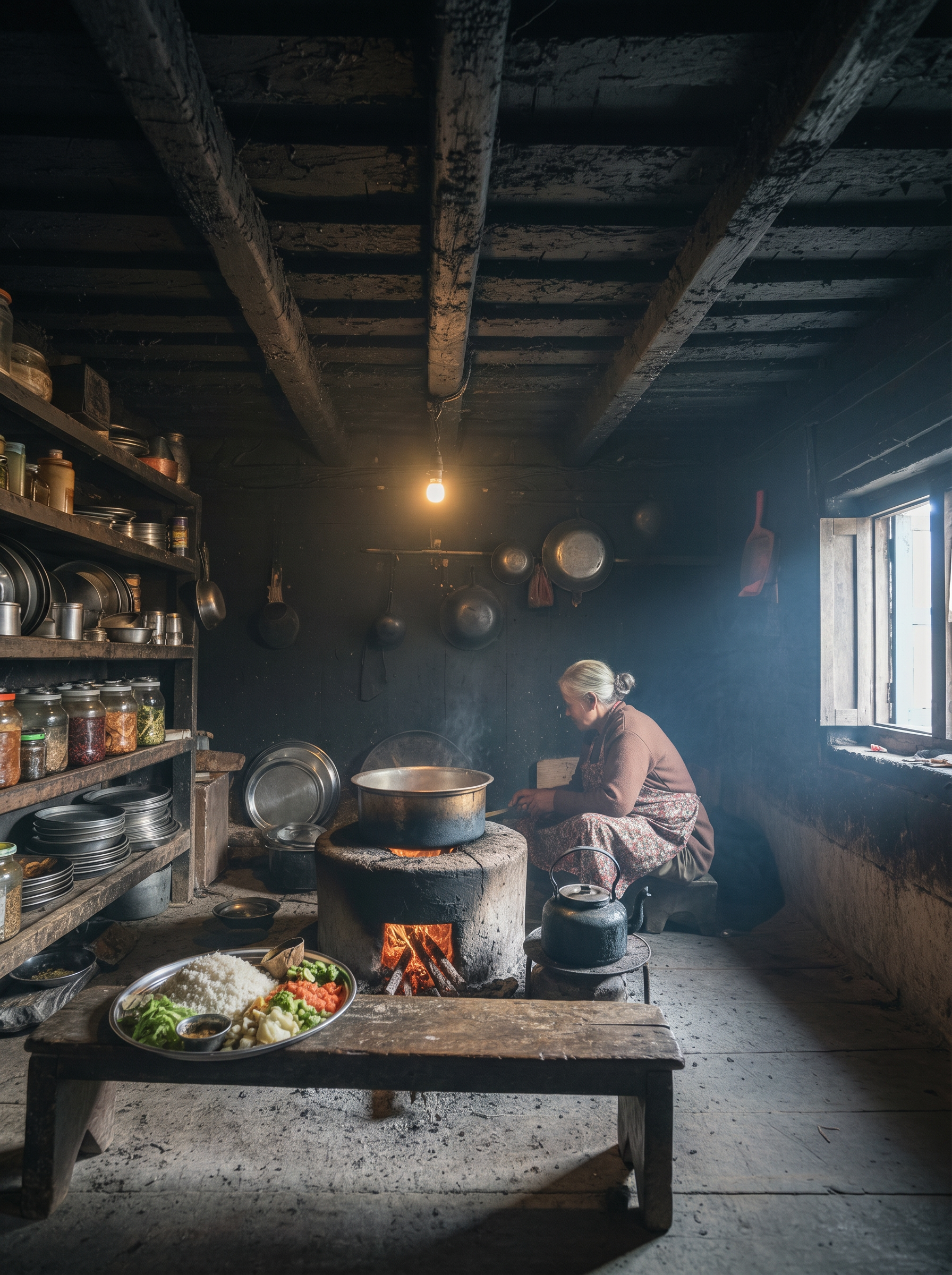
The trail belongs to the Gurung. Their language is its own, neither Nepali nor Tibetan. Their villages along the lower Modi Khola grow barley, buckwheat, and potato on hand-cut terraces. The teahouses are theirs, the porters are theirs, the millet alcohol on the table at the end of a long day is theirs.
You are not passing through someone's backdrop. You are walking through a working community that has chosen to share its trail with you.
Teahouse · Gurung community life
ii.
The Annapurna Conservation Area
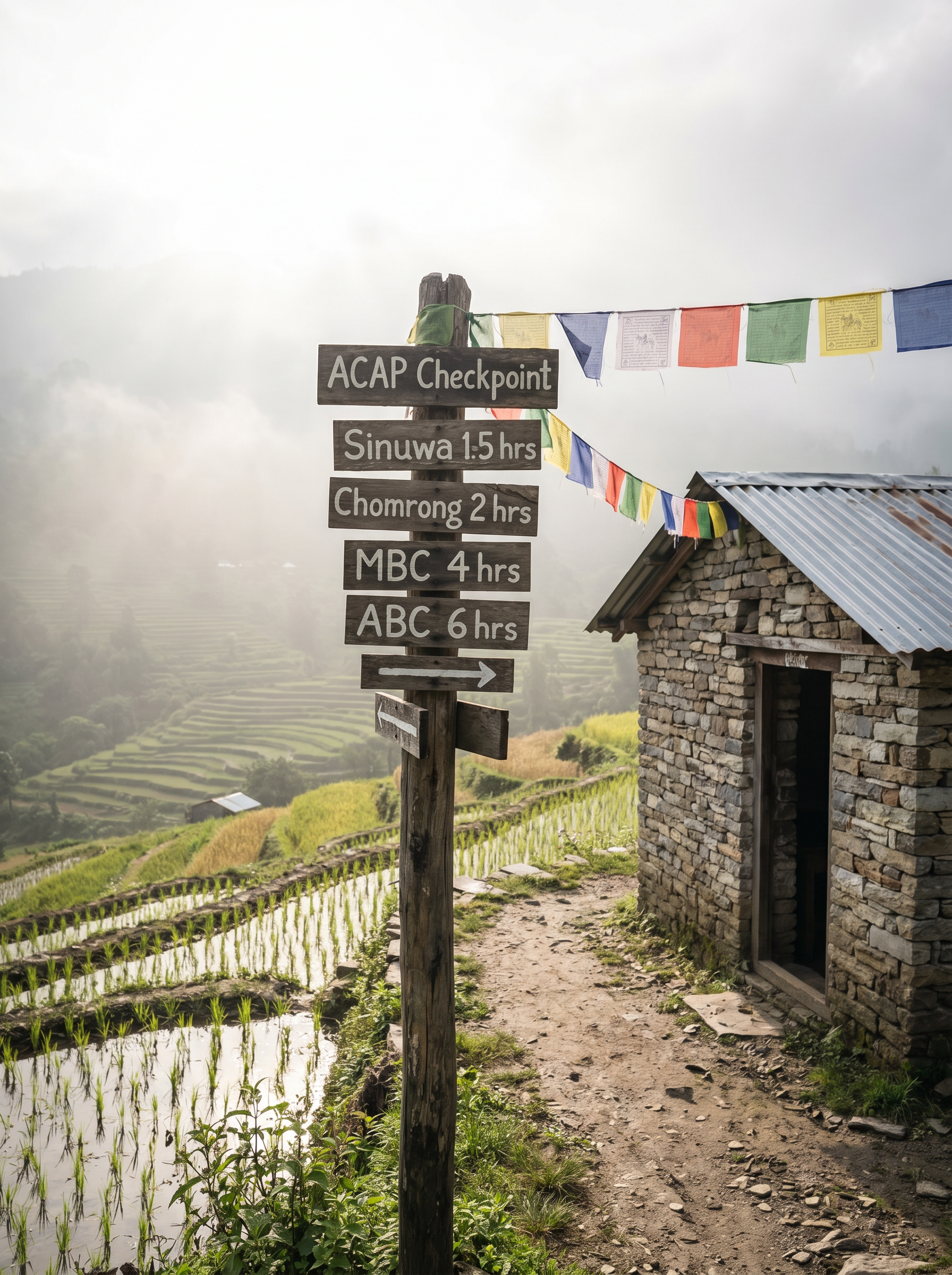
The sanctuary you enter at Chomrong is the largest protected area in Nepal, and the country's first. The trail's ethic comes from there. No open fires. No left-behind plastic. Vegetarian above Dovan, because the mountain is sacred to both Hindus and Buddhists and meat is not permitted in its presence.
The cleanest trek in Nepal isn't a slogan. It's an outcome of the Gurung community deciding, year by year, that it would be.
Annapurna Conservation Area
iii.
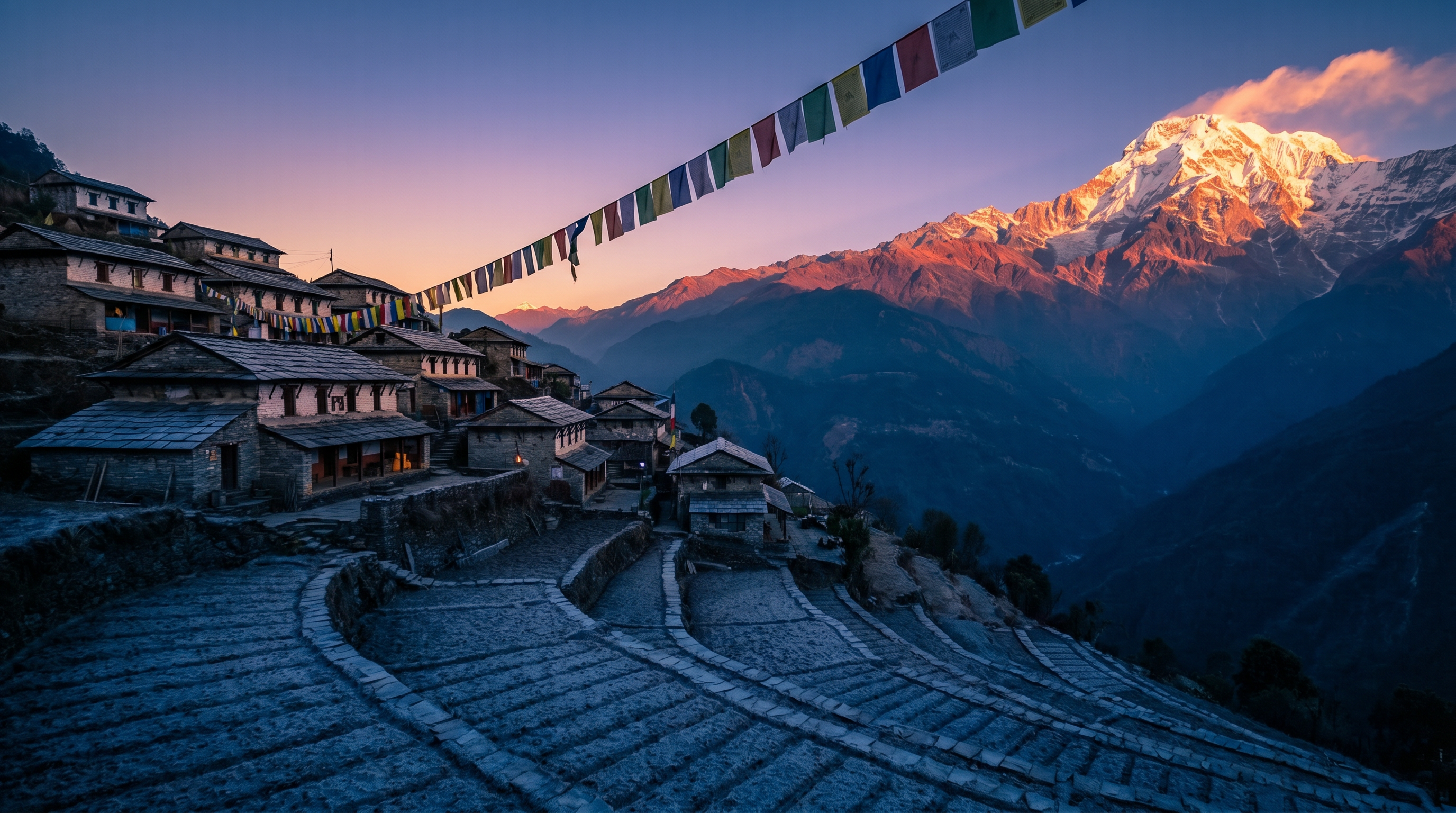
Annapurna I, the first eight-thousander
In June 1950, Maurice Herzog and Louis Lachenal stood on the summit of Annapurna I — the first eight-thousand-metre peak ever climbed, three years before Everest. They came down with severe frostbite and lost most of their fingers and toes on the descent.
The peak you see from base camp is the one that opened the era of high-altitude mountaineering. The Sherpas and porters who made that climb possible were rarely named in the history. We name them on the trail.
The sanctuary · Annapurna I
iv.
Machhapuchhre, the unclimbed
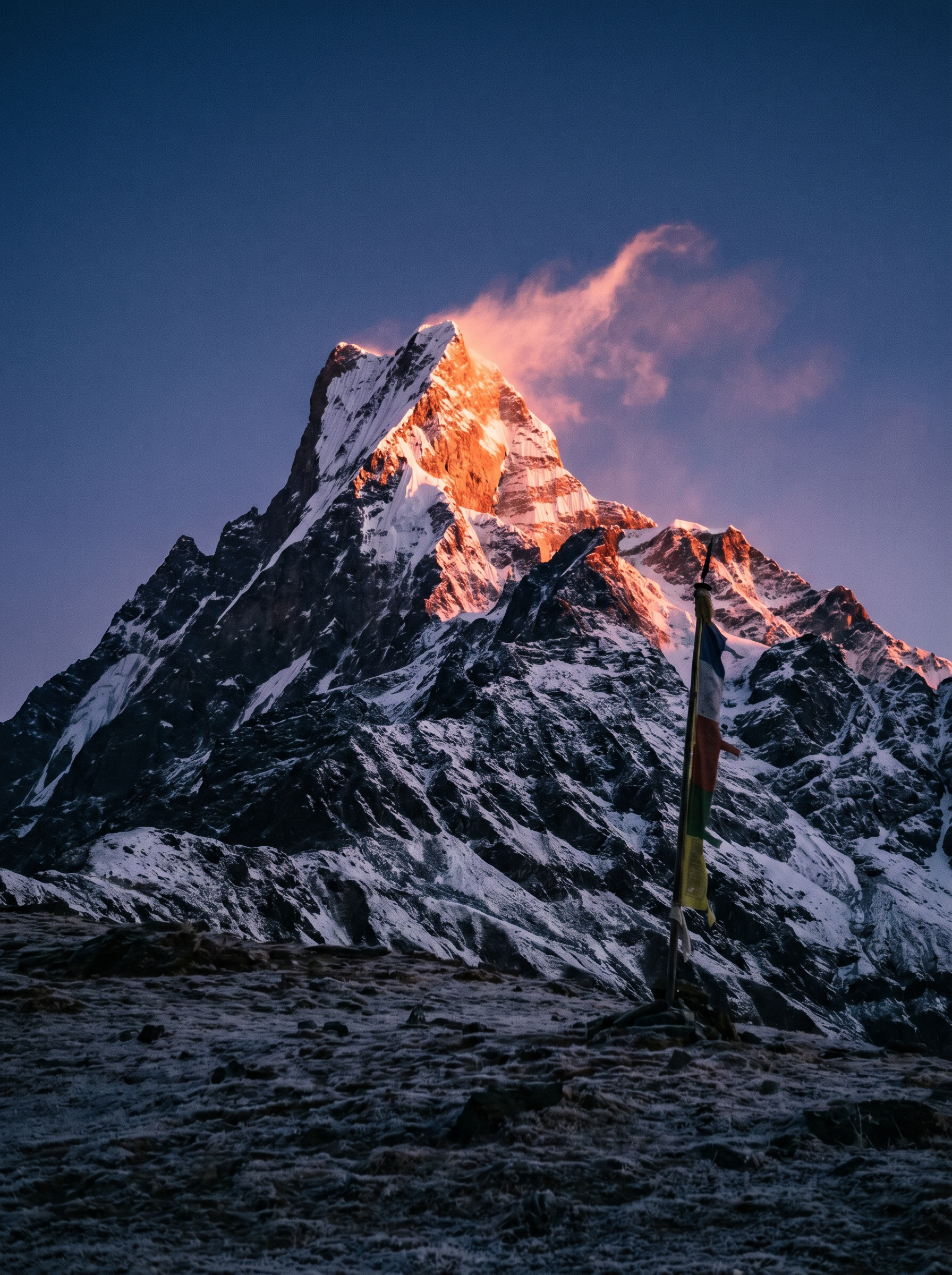
The fishtail peak rises above every photograph of this trek. It is sacred to Shiva, and by the request of the Nepali government and local communities, it has never been summited. A British expedition in 1957 stopped fifty metres short of the top out of respect.
You will see it for seven days. It is the only major Himalayan peak no human has stood on. That fact, kept by everyone, is part of what the sanctuary means.
The fishtail · unclimbed
The Modi Khola valley · between Sinuwa and Dovan
The shape of the walk
Move along the trail.
48 kmtotal distance4,130 mhigh point+3,300 mascent · four days
Scroll to walk
The walk begins · km 0 · 822 m
The Days
Day by day, walked.
The frame above runs underneath all of them. Each day below tells you only what that day adds — what changes underfoot, where the place reveals something new, what past walkers have left behind.
01
The Approach · ascent
Pokhara → Chomrong
Drive in. The trail begins where the road ends.
Walk
2.5 km
Time
2–3 hrs
Ascent
+520 m
Descent
—
Sleep at
2,170 m
Stay
Teahouse
On this dayGurung village lifeTerraced barley fieldsFirst sight of the sanctuary
The drive from Pokhara follows the Modi Khola north into the foothills. Annapurna South and the fishtail rise on the right as the road climbs. We start walking at Jhinu and reach Chomrong by late afternoon — a Gurung village on a steep ridge, with terraced barley fields and a view of the sanctuary you will enter tomorrow.
First night in a teahouse. Wholesome dinner. Early sleep.
Notes from the trail · 3 clips · drag →
On trail
"Dirt road, steel bridge, then the walk. The head starts before the body does."
Swapnil · pre-arrival
On trail
"Annapurna South was still gold on its eastern shoulder when we reached."
Deepak · lead operator
On trail
"The teahouse owner remembered us from the last walk — and asked about a dog."
Pravin · trip leader
Chomrong · arrival, Day 1
02
The Approach · ascent
Chomrong → Dovan
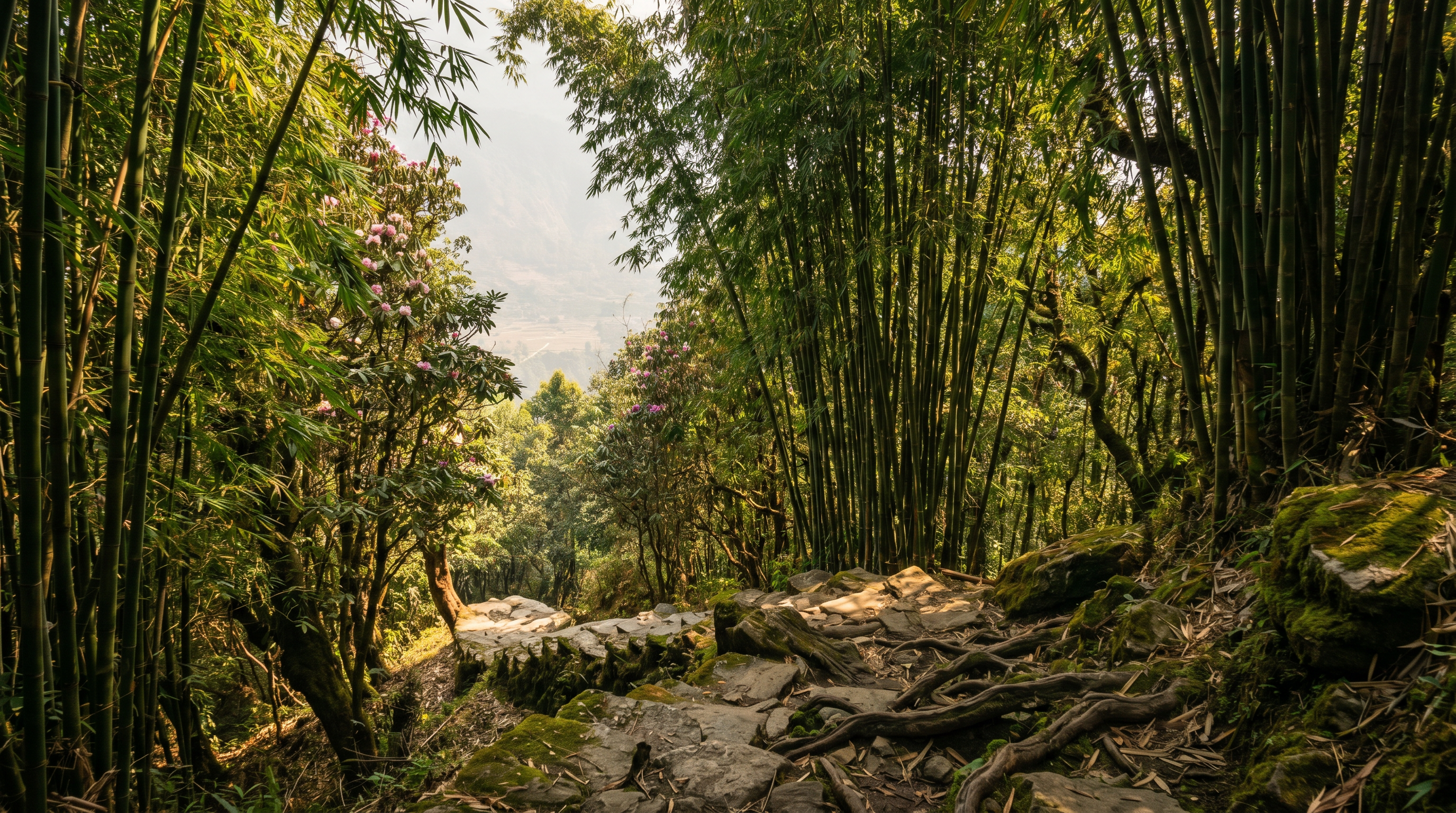
Down to the river, then up. Bamboo, oak, rhododendron.
Walk
9.6 km
Time
6–7 hrs
Ascent
+800 m
Descent
−370 m
Sleep at
2,600 m
Stay
Teahouse
On this daySteel suspension bridgesRhododendron forestThe sacred boundary at Dovan
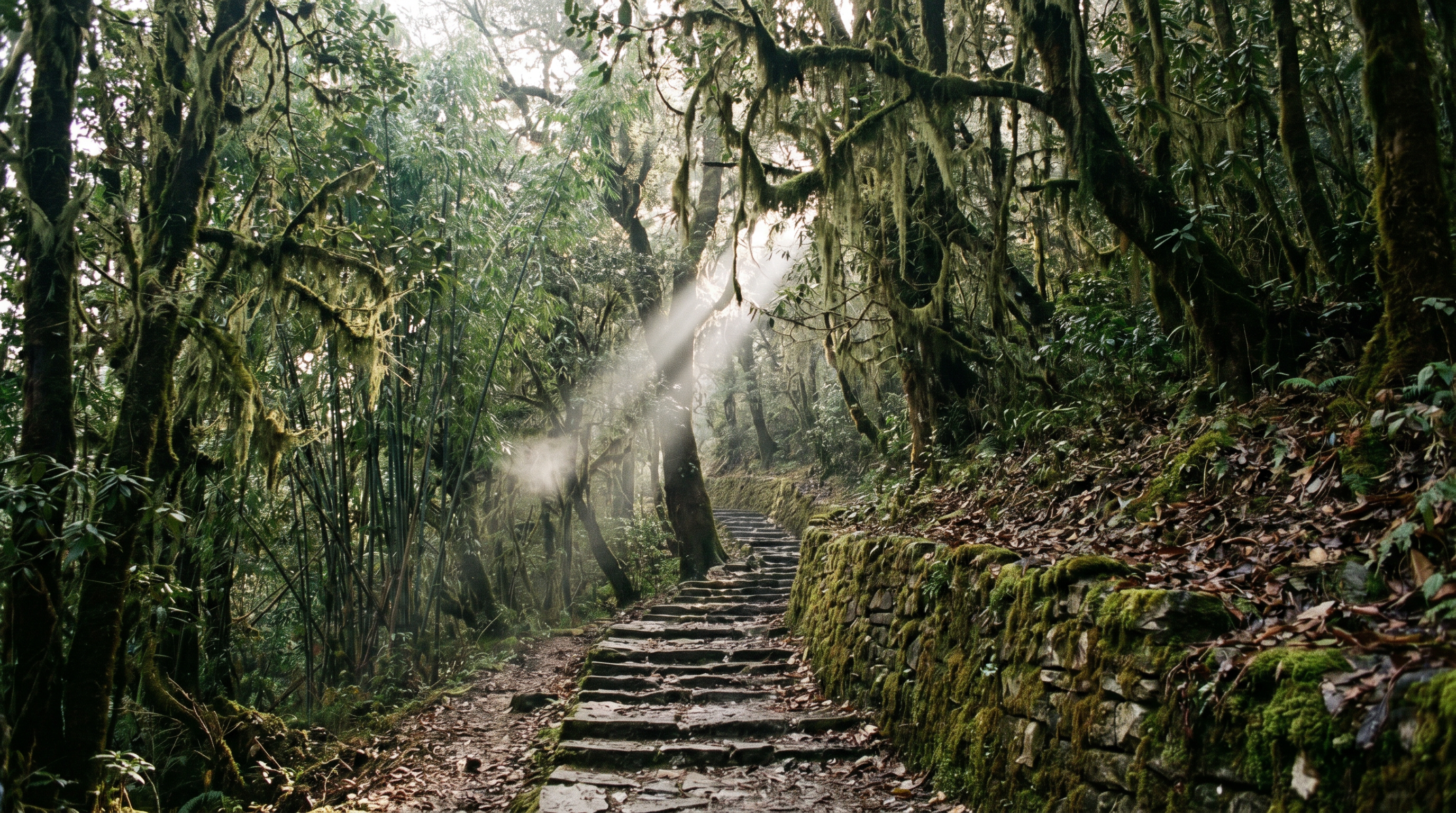
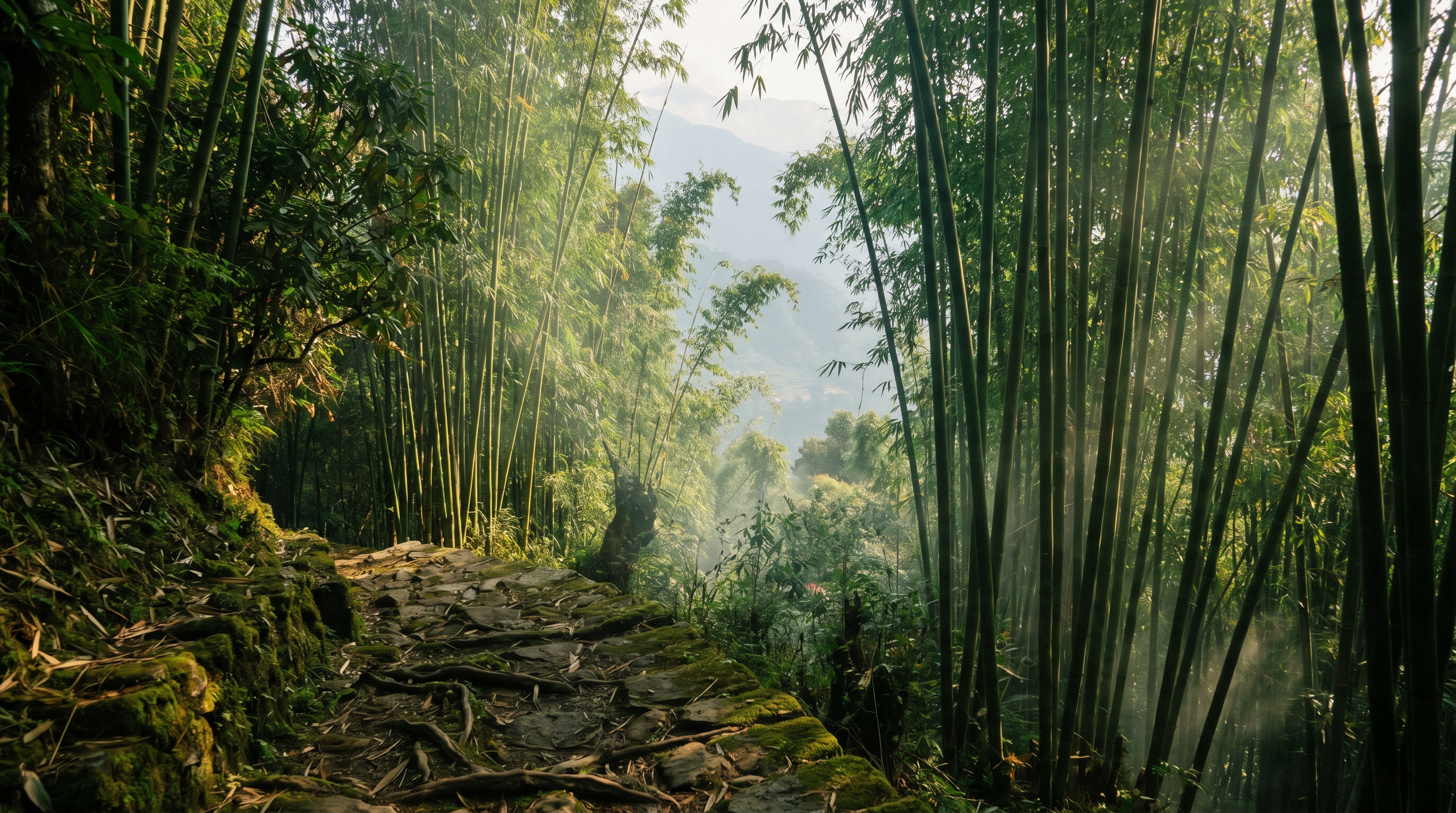
The trail leaves Chomrong with a long, steep descent to the Chomrong Khola, a river crossing on a steel suspension bridge, and then a longer, steeper climb out the other side to Sinuwa. From Sinuwa the gradient settles. Through Khuldigar the forest closes in: bamboo first, then oak, then rhododendron, the trees twisted and lichen-hung where the air stays damp.
Tea-stop refills are at every settlement. By mid-afternoon you reach Dovan, a clutch of teahouses where the river runs loud and the trees keep most of the sky. The walk has been long. The body is starting to know it's on a trek.
Place — the rule above Dovan
Why dinner becomes vegetarian tonight
From Dovan onward the trail is considered to enter the inner sanctuary, sacred to both Hindus and Buddhists. The Gurung community and the Annapurna Conservation Area Project keep meat off the trail above this point. The teahouse menus shift accordingly. Dal bhat with greens, fried potatoes, vegetable thukpa, the occasional egg — and tea, always tea.
Notes from the trail · 3 clips · drag →
On trail
"Three hundred metres down, knees only, before the climb begins. We say so at breakfast."
Deepak · lead operator
On trail
"Dal bhat at Sinuwa. The body knows what it needs at altitude before the brain does."
Swapnil · pre-arrival
On trail
"The forest closes in — bamboo first, then oak, then lichen-hung rhododendron."
Pravin · trip leader
The forest above Sinuwa · Day 2
03
The Approach · ascent
Dovan → Deurali
Up the narrow valley. The treeline thins.
Walk
5 km
Time
4–5 hrs
Ascent
+600 m
Descent
—
Sleep at
3,200 m
Stay
Teahouse
On this day108 sacred waterfallsMachhapuchhre revealsCrossing the treeline
A shorter day by distance, but the walk steepens and the air begins to thin. The trail follows the Modi Khola through a narrow glacial valley, the cliffs close on both sides. Past the Himalaya teahouse settlement, the forest gives way to scrub and the first long views open up — Machhapuchhre directly ahead, Annapurna South to the left.
By early afternoon you reach Deurali. The treeline is below you now. Layer up before sunset; this is the first night the cold makes itself felt.
Place — the bamboo forest
108 sacred waterfalls
The stretch between Dovan and Deurali passes through a forest the Gurung call the place of one hundred and eight waterfalls. 108 is a sacred number in both Hindu and Buddhist tradition. They are not all running at once, and counting is the wrong way to meet them. After rain, the forest sounds like a single instrument.
Notes from the trail · 3 clips · drag →
On trail
"Machhapuchhre reveals above the cliffs. Nobody speaks for a minute."
Deepak · lead operator
On trail
"Two sisters from Ghandruk run the Himalaya kitchen. Solar phone-charging, fifty rupees."
Pravin · trip leader
On trail
"After rain, the waterfall forest sounds like a single instrument."
Swapnil · pre-arrival
The valley narrows · Day 3
04
The Sanctuary · high point
Deurali → ABC · the high point
Into the sanctuary. The amphitheatre opens.
Walk
7 km
Time
6–7 hrs
Ascent
+930 m
Descent
—
Sleep at
4,130 m
Stay
Teahouse
On this dayThe sanctuary bowlThe unclimbed peakGlacier-fed coldStars at 4,130 m
The treeline thins above Deurali. The air is colder and drier; the rhododendron and oak give way to scrub, then to nothing. Just glacial moraine and the river, narrowing. The walk is steady rather than steep. Pacing matters more than effort.
By mid-morning the valley turns and Machhapuchhre Base Camp comes into view, a flat shoulder at 3,700 metres with the fishtail peak almost directly overhead. Most groups stop here for tea. From MBC the trail bends west into the sanctuary itself, and the peaks begin to circle you: Annapurna South on the left, Hiunchuli behind, Annapurna I straight ahead. There is no horizon. There is only mountain.
The 360° view does not need to be described; it does need to be earned.
You arrive at Annapurna Base Camp by early afternoon. Drop your pack. Drink water. Walk the ten minutes to the prayer-flag cairn and sit down. The four days were for this.
Dinner is in the teahouse. Lights out early. The stars at 4,130 metres are the kind that change what you thought stars were.
Place — the sanctuary
An amphitheatre of glaciers
The Annapurna Sanctuary is a near-perfect bowl, ringed by Annapurna I, Annapurna South, Hiunchuli, Gangapurna, and Machhapuchhre. It opens only to the south, where the Modi Khola escapes — the river you have been walking beside since Day One. Geologically, it is what is left after a glacier carved a circle and the ice retreated. Culturally, the Gurung consider the sanctuary the home of their old gods. Before tourism, it was rarely entered.
Place — the unclimbed peak
Why no one has stood on Machhapuchhre
The mountain you have been watching for four days is sacred to Shiva. In 1957, the only expedition ever permitted, a British team led by Wilfrid Noyce, turned back fifty metres below the summit out of respect for the request of the Nepali king and the Gurung community. Climbing has been formally forbidden ever since. From Base Camp it sits to your east, sharper than any other peak in the bowl. It is the closest thing in the Himalaya to an absolute.
Notes from the trail · 4 clips · drag →
On trail
"Photographs flatten the bowl. Standing inside it, the peaks lean over you."
Deepak · lead operator
On trail
"T-shirt in the sun at noon; down jacket the moment cloud passes."
Pravin · trip leader
On trail
"The best dal bhat on the trail is at 4,130 metres."
Deepak · lead operator
On trail
"Sunset at the prayer-flag cairn. Most of the group just sits."
Swapnil · pre-arrival
The bowl, mid-morning · ABCMachhapuchhre · the unclimbed peak
05
The Return · descent
ABC → Bamboo
Down into the forest. The valley closes again.
Walk
14 km
Time
6–7 hrs
Ascent
—
Descent
−1,820 m
Sleep at
2,310 m
Stay
Teahouse
On this dayBlood pheasantsThe forest returnsThe valley, walked twice
The sanctuary releases you. The day is long but downhill — back through Deurali and the Himalaya teahouses, retracing the river. The bamboo and rhododendron return. By Bamboo it is warm again and the air is thick with green.
This is also the day, somewhere on the descent, where the valley you walked into reveals itself as a place you have actually entered. Walking out, you notice what walking in did not have time to show.
Notes from the trail · 3 clips · drag →
On trail
"The lungs recover, the knees do not. Poles earned their place today."
Deepak · lead operator
On trail
"A flock of blood pheasants crossed the trail above Himalaya."
Pravin · trip leader
On trail
"Walking out shows you what walking in didn't have time to."
Swapnil · pre-arrival
Walking out · Day 5
06
The Return · descent
Bamboo → Jhinu Danda
A long descent and a hot spring. The body remembers it has been working.
Walk
10 km
Time
5–6 hrs
Ascent
+250 m
Descent
−780 m
Sleep at
1,780 m
Stay
Teahouse
On this dayJhinu hot springsKimrong Khola crossingPrayer flags over terraces
The morning drops to the Kimrong Khola, knee-work, not lung-work, and then climbs again through forest, bamboo and oak and rhododendron one last time. By early afternoon you are at Jhinu Danda, a small ridge village with terraced fields, prayer flags, and a stone trail running down to the Modi Khola.
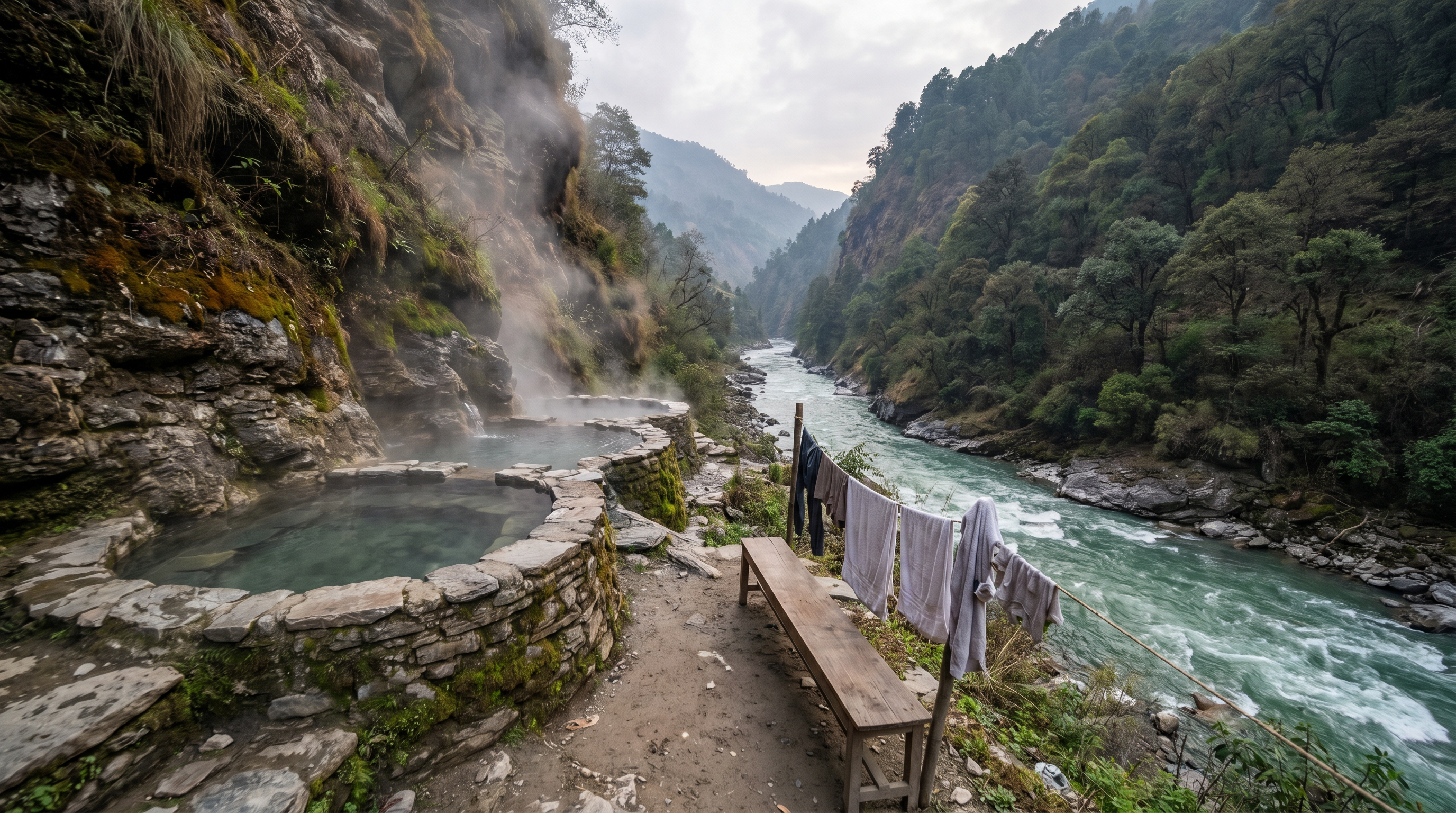
Ten minutes below the village sit the hot springs — three pools, fed from the cliff, looking onto the river. You sit in them. You stop talking. The walk has been six days; the heat undoes most of what it did.
Notes from the trail · 3 clips · drag →
On trail
"Forty degrees, fed straight from the cliff. Nobody talks much in there."
Deepak · lead operator
On trail
"One real climb left; one cold beer waiting in Jhinu. Both true."
Pravin · trip leader
On trail
"Local families come down to the springs on weekends. A tradition, not an amenity."
Swapnil · pre-arrival
Hot springs · Day 6
07
The Return · out
Jhinu → Pokhara
Out. The road, then the lake.
Walk
~3 km
Drive
4–5 hrs
Ascent
—
Descent
−960 m
Arrive
822 m
Stay
Hostel
On this dayPhewa Lake at duskThe drive through hill villagesLast dinner, full circle
A short walk down a dirt road to the jeep pickup, then the long, scenic drive back to Pokhara through hill villages and river valleys. By late afternoon you are by Phewa Lake. The mountains you walked through are visible from your dinner table.
Last night together. Goodbyes the next morning, by ten.
Notes from the trail · 3 clips · drag →
On trail
"Sore in specific places you won't notice for two days, then notice for a week."
Deepak · lead operator
On trail
"Strangers seven days ago — already planning Khopra at dinner."
Swapnil · pre-arrival
On trail
"The mountains you walked through, visible from the dinner table."
Pravin · trip leader
Pokhara, last evening · Day 7
Is this for you?
A grade, and an honest answer.
We grade our journeys on a 1–6 scale. ABC sits at three: a full multi-day walk, real altitude, but no technical terrain.
Climb ten flights of stairs without your breath catching for long
Carry a 5–7 kg daypack for a full day
Be six to eight weeks out from the departure with time to train
The walk is not technical. There is no scrambling, no fixed rope, no glacier travel. What it asks is sustained, day-after-day effort: six to seven hours of walking on stepped trails, four days of climbing, three days of descent, with one night at 4,130 m.
Day 4 is the day to plan for. Nine hundred and thirty metres of ascent, ending at the highest sleep of the trek, with the final hour above 4,000 m. If you've not slept above 3,500 m before, that night will be unfamiliar — colder, drier, with an unsettled first-time sleep that almost everyone has and almost everyone sleeps through by morning.
The descent on Day 5 is the part most people underestimate. Fourteen kilometres downhill, mostly on stone steps, can be harder on the knees than the ascent was on the lungs. Trekking poles help. So does pacing it slow.
Deepak · above Muktinath, Mustang · 2025
Walking with you
Deepak
Lead operator · Annapurna Base Camp
Deepak has walked the Annapurna Sanctuary trail more times than he keeps count of, in every season the route runs. He is the person making the calls when weather turns above MBC, when someone in the group is moving too slow, when a teahouse on the planned route is unexpectedly full, when the descent on Day 5 has to be paced differently for someone whose knees are protesting. The work of leadership on a trek is mostly invisible — it is the absence of problems you didn't know to worry about.
He is also the person you eat with. The brand is built around the idea that the leader is not a service provider; the leader is the journey. From your first call to the last dinner in Pokhara, three people carry you through it.
Mountaineering
NMA-certifiedNepal Mountaineering Association
Medical
Wilderness First ResponderWFR-certified
Summit record
Multiple peaks6,000 m+
S
Swapnil
Your person, pre-arrival
From your first application call to the day you fly, Swapnil — alongside Deepak — is who you actually talk to. Gear questions at 11 pm, training doubts, the nervous week before departure. One name, not a ticket queue.
P
Trip leaders, like Pravin
On the trek, every day
Each cohort walks with a dedicated trip leader. Pravin sets the pace, reads the group, watches the weather above MBC, and knows every teahouse kitchen by first name. Your six weeks of notes are in his pocket before you land.
Safety
What we plan for, before it happens.
If something doesn't go to plan
Three of the failure modes we plan for, and how the day works when they happen.
Weather closes the route above MBC
We hold at MBC, not Deurali — better teahouses, better acclimatisation. If the window doesn't open in 24 hours we descend. ABC is the goal; getting back is the priority.
Altitude affects a member of the group
The lead guide makes the call. Mild AMS: rest day, hydration, monitoring. Moderate or worsening: descent, no negotiation. The kit covers stabilisation; the trail covers the rest.
A teahouse is full or closed
The trail has redundancies: Sinuwa instead of Bamboo on the descent, Himalaya instead of Deurali. Days flex by an hour either way; the journey doesn't.
From application to arrival
A six-week preparation, not a booking confirmation.
An application is the start of a relationship, not a transaction. Between confirmation and your flight to Pokhara sit six weeks of conversation. Tap a week.
W−6Apply & talk
A call, by name, within days.
You apply. We schedule a video call — Swapnil and Deepak, not a bot, not an auto-reply. We talk about the trek, about you, about whether the fit is right both ways.
Real conversationFit, both ways
Scheduled departures
Pick a date. Apply to reserve.
Departures run in the dry windows — late winter and post-monsoon. Each cohort caps at twelve. We confirm by hand after a short conversation; a place is held the moment we both agree.
Oct 2026
Cohort of 12
Nov 2026
Cohort of 12
Dec – Jan
Closed · winter snow holds the sanctuary
Feb 2027
Cohort of 12
Mar 2027
Cohort of 12
Apr – Sep
Closed · monsoon on the Modi Khola
The trail runs when the sky allows.
Four departures a year, in the two dry windows. Pick one on the calendar — the form fills in the rest. We confirm by hand after a short conversation; a place is held the moment we both agree.
From
$400 per person
Includes all stays, meals, transport from Pokhara, permits, guide and porter, travel insurance and the medical kit on the trail. International flights, beverages, tips and 5% GST sit outside.
Annapurna Base Camp · 7 days · Walk the Land Departures · Feb · Mar · Oct · Nov